Autonomous Drone Solutions: The Future of Smart Operations in 2026
Autonomous drone technology is no longer a concept on the horizon. It is actively reshaping how governments, enterprises, and industrial operators manage their most critical functions. This guide covers what is driving that shift and what it means for your organisation in 2026.
Introduction
The organisations that will define the next decade of operational excellence are not waiting for the future to arrive. They are deploying it right now.
Across infrastructure networks, government agencies, agricultural operations, and enterprise security functions, autonomous drone solutions are fundamentally changing how data is collected, assets are monitored, and decisions are made. The shift from manual processes to intelligent, automated aerial systems is not incremental. It is structural.
In 2026, autonomous drone technology has matured past the experimental phase. The hardware is proven. The software is sophisticated. The regulatory frameworks are taking shape. What separates organisations that capture the full value of this technology from those that do not is strategy, implementation, and the expertise to bridge all three.
This is where the conversation about autonomous drone solutions needs to begin: not with the hardware, but with the outcomes it enables and the expertise required to deploy it responsibly and effectively.
What Are Autonomous Drone Solutions
Autonomous drone solutions refer to integrated systems where unmanned aerial vehicles operate with minimal or zero human intervention during flight. Unlike remotely piloted drones that require a trained operator controlling every movement, autonomous systems use onboard intelligence to navigate, execute missions, and respond to environmental variables in real time.
These solutions encompass the full operational stack: flight planning, obstacle avoidance, data capture, transmission, and landing, all managed through software-driven decision-making. When deployed as part of a broader enterprise or government workflow, they connect to existing data infrastructure, feeding insights directly into operational dashboards, security systems, or compliance reports.
The distinction that matters most for enterprise and government buyers is this: autonomous drone technology is not a product you purchase. It is a capability you build. That requires expertise in system integration, regulatory compliance, mission design, and workforce training, all of which sit outside the scope of any hardware vendor.
Key Technologies Behind Autonomous Drone Technology
AI and Machine Learning
Artificial intelligence is the engine that makes true autonomy possible. Machine learning models allow drones to recognise objects, classify threats, detect anomalies in infrastructure, and adapt their flight behaviour based on mission parameters and environmental input.
In enterprise deployments, AI enables drones to move from simple data collection to intelligent analysis. A drone monitoring a power grid does not just capture footage. It identifies corrosion, detects heat signatures, and flags structural deviations against historical baselines, all without a human reviewing raw footage in real time.
Computer Vision and Sensors
Computer vision allows autonomous systems to perceive and interpret their environment visually. Combined with LiDAR, thermal imaging, multispectral sensors, and high-resolution cameras, modern autonomous drones can gather layered, multi-dimensional data across a single mission pass.
For sectors like construction, agriculture, and public safety, this multi-sensor capability transforms what a single aerial deployment can deliver. What previously required multiple inspection teams, days of fieldwork, and significant logistical coordination can now be completed with greater precision in a fraction of the time.
GPS and Navigation Systems
Robust navigation is the operational backbone of any autonomous drone solution. Modern systems combine GPS with inertial measurement units, barometric sensors, and increasingly, visual positioning systems that allow accurate navigation even in GPS-degraded environments.
For government and defence-adjacent applications where signal reliability cannot be assumed, this multi-layered navigation architecture is not a feature. It is a requirement. Organisations evaluating autonomous drone technology must assess navigation resilience as a core capability criterion.
Real-Time Data Processing
The value of aerial data degrades rapidly if it cannot be processed and acted upon quickly. Edge computing capabilities built into advanced drone systems allow initial data processing to occur onboard or at a nearby ground station, reducing latency between data capture and operational insight.
For time-sensitive applications, such as emergency response coordination, perimeter security, or live infrastructure monitoring, real-time processing is what elevates autonomous drone solutions from useful tools to mission-critical systems.
Use Cases of Autonomous Drone Solutions Across Industries
Government and Public Safety
Government agencies are among the most significant early adopters of autonomous drone technology. Applications span border surveillance, disaster response coordination, crowd monitoring, search and rescue operations, and environmental enforcement.
The operational advantage is clear. Autonomous systems can cover terrain that is hazardous or inaccessible to personnel, maintain persistent surveillance over defined areas, and relay real-time situational data to command centres without fatigue or the risk of human error under pressure.
For public safety agencies, the return on investment is measured not just in efficiency but in outcomes: faster response times, better situational awareness, and reduced risk to field personnel.
Infrastructure and Construction
Infrastructure operators managing road networks, pipelines, bridges, power lines, and telecommunications towers are increasingly deploying autonomous drone solutions to replace or augment traditional inspection programmes.
The economics are compelling. A manual inspection of a long-distance pipeline or transmission network requires significant personnel, equipment, and time. An autonomous drone system can complete the same survey with greater consistency, generate structured data outputs, and reduce inspection cycles from months to weeks.
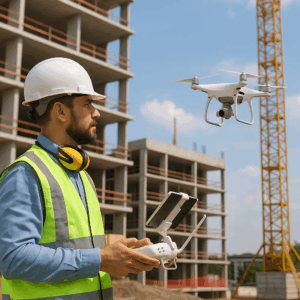
In construction, autonomous drones support site progress monitoring, volumetric analysis, and compliance documentation, giving project managers accurate, current data without disrupting active work.
Agriculture and Environmental Monitoring
Precision agriculture represents one of the most mature applications of autonomous drone technology globally. Crop health monitoring, irrigation analysis, pest detection, and yield forecasting are all being transformed by aerial intelligence at scale.
For environmental agencies and conservation bodies, autonomous systems provide a cost-effective mechanism for monitoring deforestation, tracking wildlife populations, assessing flood damage, and enforcing land-use compliance across areas that would be prohibitively expensive to survey on foot.
Security and Surveillance
Enterprise campuses, critical infrastructure sites, ports, and energy facilities are deploying autonomous drone solutions as a force multiplier for existing security operations. Automated perimeter patrol, intruder detection, and incident response support are replacing or supplementing traditional CCTV and manned guard programmes.
The advantage of autonomous systems in security contexts is consistency. Unlike human operators, they do not experience fatigue, do not miss scheduled patrols, and can escalate alerts to human security personnel the moment a threshold is breached.
Benefits of Autonomous Drone Technology
The case for autonomous drone solutions across enterprise and government contexts rests on several compounding advantages.
- Operational efficiency: Missions that required multiple personnel and days of planning can be executed in hours with consistent, repeatable results
- Cost reduction: Lower per-inspection costs, reduced personnel deployment in hazardous environments, and faster data turnaround translate directly to financial savings
- Data quality: Autonomous systems follow precise flight paths and capture data at defined intervals, producing more consistent outputs than manually flown missions
- Scalability: Once systems are configured and compliant, they can be replicated across sites or regions without proportional increases in cost or complexity
- Safety: Removing personnel from hazardous inspection environments reduces occupational risk significantly
- Decision support: Real-time, structured aerial data feeds directly into operational and executive decision-making workflows
Challenges and Regulatory Considerations
Deploying autonomous drone technology at enterprise or government scale is not without its complexities. Organisations that underestimate these dimensions risk costly delays, compliance failures, and underperforming deployments.
Key challenges include:
- Regulatory compliance: Aviation authorities across every jurisdiction impose specific requirements on autonomous operations, including airspace authorisation, operator certification, and equipment standards. These frameworks are evolving and vary significantly by country and application type.
- Integration complexity: Connecting autonomous drone systems to existing operational infrastructure, whether asset management platforms, security systems, or GIS databases, requires careful technical planning.
- Data governance: Aerial data collection at scale raises questions about storage, access, privacy, and retention that must be addressed before deployment.
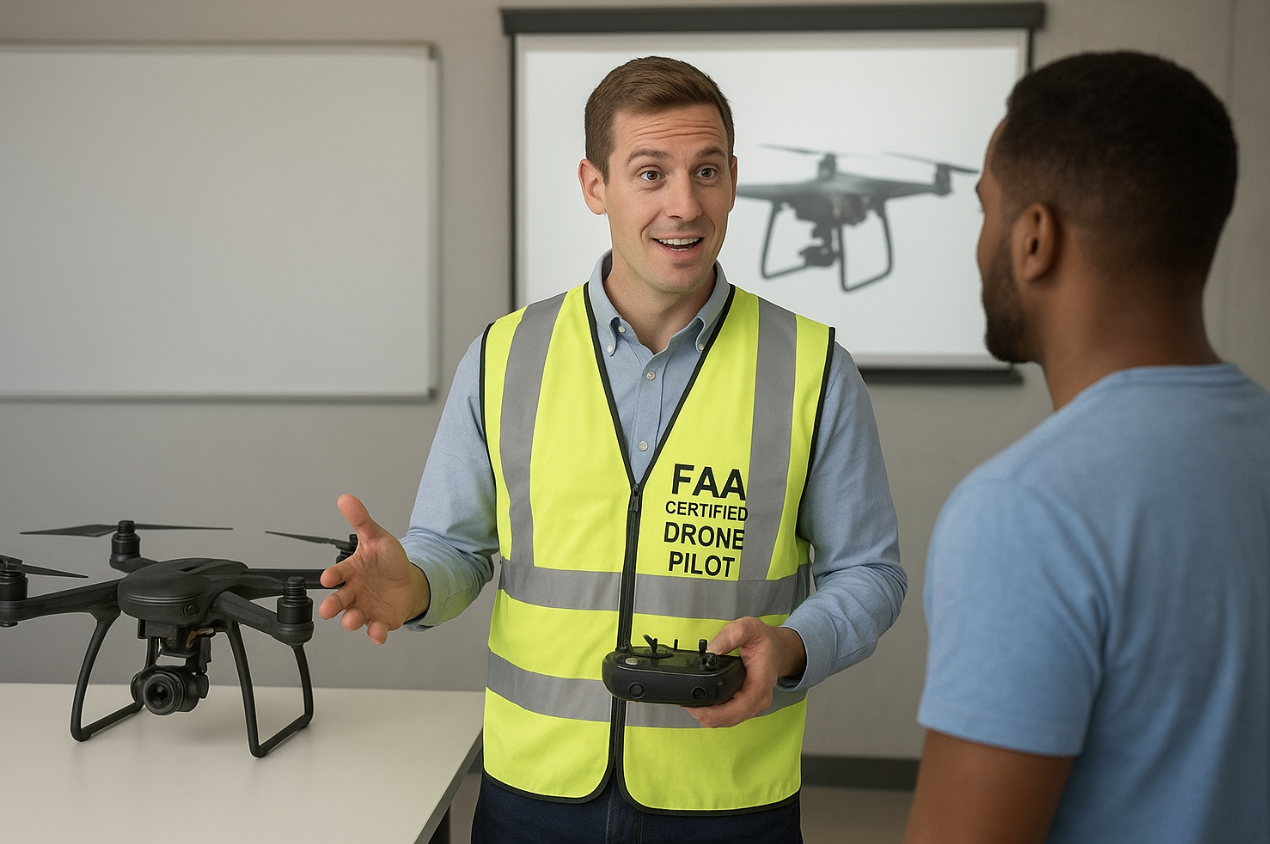
- Workforce readiness: Organisations must invest in training personnel to manage, interpret, and act on drone-generated data, not just to fly the systems.
- Cybersecurity: As drone systems become more connected, securing data transmission and preventing interference becomes an operational priority.
Navigating these challenges requires more than technology. It requires structured expertise and a deployment partner who understands both the operational context and the regulatory landscape.
Why SkyIntelli is Leading in Autonomous Drone Solutions
SkyIntelli occupies a distinct and critical position in the autonomous drone ecosystem. As a consulting and training organisation rather than a hardware manufacturer, SkyIntelli brings something that technology vendors cannot: independent, strategic expertise focused entirely on client outcomes.
Where hardware vendors are incentivised to sell specific products, SkyIntelli evaluates the full solution landscape and recommends what is genuinely right for each client's operational requirements, regulatory environment, and long-term objectives.
SkyIntelli's approach to autonomous drone solutions is built around four pillars:
- Strategic assessment: Understanding the operational problem before recommending any technology
- Compliance architecture: Ensuring deployments meet all applicable aviation, data, and operational regulations
- Implementation guidance: Supporting integration of drone systems into existing enterprise workflows
- Training and capability building: Equipping client teams with the skills to operate, manage, and derive ongoing value from autonomous systems
For government agencies and enterprise operators who need to deploy autonomous drone technology responsibly, at scale, and with measurable outcomes, SkyIntelli provides the strategic layer that bridges technology and execution.
Future Trends in Autonomous Drone Technology (2026 and Beyond)
The trajectory of autonomous drone technology points toward deeper integration, greater intelligence, and expanded operational scope.
Key trends shaping the next phase include:
- Beyond Visual Line of Sight operations becoming standard as regulatory frameworks mature globally
- Drone-in-a-box and persistent deployment systems enabling continuous autonomous monitoring without human launch and recovery intervention
- Swarm intelligence allowing coordinated multi-drone missions for large-area coverage and complex operational tasks
- AI-driven predictive analytics transforming drone data from reactive reporting to forward-looking operational intelligence
- Integration with digital twin platforms enabling real-time synchronisation between physical infrastructure and its digital representation
- Increased adoption of autonomous systems in urban environments as air traffic management frameworks for low-altitude operations become established
Organisations that are building their autonomous drone capabilities today are not just solving current operational problems. They are positioning themselves for a significantly more capable and integrated aerial intelligence environment in the years ahead.
Conclusion
Autonomous drone solutions have crossed the threshold from emerging technology to operational reality. For government agencies, enterprise operators, and industrial organisations, the question in 2026 is no longer whether to engage with this technology. It is how to do so strategically, compliantly, and with maximum operational return.
The organisations that will lead are those that approach autonomous drone technology not as a procurement decision but as a capability investment. That investment requires the right technology, the right expertise, and the right partner to connect both.
SkyIntelli exists precisely to make that connection. If your organisation is evaluating autonomous drone solutions or looking to scale an existing programme, the strategic conversation starts with understanding your outcomes, not your hardware options.
FAQs
What are autonomous drone solutions and how do they differ from standard drones?
Autonomous drone solutions are integrated systems where drones operate with minimal human intervention, using AI, computer vision, and advanced navigation to execute missions independently. Standard drones require a human operator controlling every movement in real time, whereas autonomous systems make intelligent decisions onboard based on pre-programmed parameters and environmental data.
What industries benefit most from autonomous drone technology?
Government and public safety, infrastructure inspection, agriculture, construction, and enterprise security are among the highest-value sectors for autonomous drone technology. Any industry involving large-area monitoring, repeat inspection cycles, or hazardous environment access stands to gain significantly from autonomous aerial solutions.
What regulatory requirements apply to autonomous drone operations?
Regulations vary by country and application type but typically cover airspace authorisation, operator certification, equipment standards, and data handling requirements. Autonomous beyond visual line of sight operations carry additional compliance obligations. Working with a specialist consulting partner like SkyIntelli is essential for navigating these frameworks correctly.
How does SkyIntelli support organisations deploying autonomous drone solutions?
SkyIntelli provides strategic consulting, compliance architecture, implementation guidance, and workforce training for enterprise and government clients deploying autonomous drone solutions. As an independent advisor rather than a hardware vendor, SkyIntelli focuses on outcomes and selects the right technology for each client's specific operational context.
What is the cost benefit of deploying autonomous drone technology for infrastructure inspection?
Autonomous drone technology significantly reduces the cost of infrastructure inspection by replacing or augmenting personnel-intensive field teams with consistent, repeatable aerial surveys. Organisations typically see reduced inspection cycle times, lower per-survey costs, and higher data quality that supports better maintenance planning and asset management decisions.
How is AI used in autonomous drone solutions?
AI enables autonomous drones to recognise objects, detect anomalies, navigate complex environments, and process data in real time without human input. Machine learning models trained on domain-specific datasets allow drones to perform intelligent analysis during flight, not just capture raw footage for later review.
What should organisations evaluate before investing in autonomous drone technology?
Organisations should assess their specific operational requirements, applicable regulatory environment, existing data infrastructure, workforce readiness, and integration needs before investing. Engaging a consulting partner like SkyIntelli at the strategy stage ensures that technology selection and deployment planning are aligned with long-term operational and compliance objectives.