How Enterprise Drone Solutions Are Transforming Government & Industrial Operations in the USA
Discover how enterprise drone solutions are revolutionizing government agencies and industrial operations across the USA with FAA-compliant consulting and training.
Introduction
When a major bridge in Pennsylvania showed signs of structural weakness in 2023, engineers faced a familiar dilemma: conduct a manual inspection that would take weeks, cost hundreds of thousands of dollars, and expose workers to dangerous heights—or deploy an enterprise drone system that could complete the assessment in hours with millimeter-level precision.
They chose the latter, and the results were transformative.
Across the United States, government agencies and industrial organizations are grappling with aging infrastructure, expanding operational demands, and shrinking budgets. Traditional inspection methods are slow, expensive, and often dangerous. Meanwhile, the technology that could solve these challenges—enterprise drone solutions USA—remains underutilized, not because of capability gaps, but due to regulatory complexity, implementation challenges, and knowledge barriers.
The organizations that are succeeding aren't just buying drones. They're partnering with drone consulting services USA to build compliant, scalable, and efficient UAV programs that deliver measurable ROI while meeting strict federal requirements.
What Are Enterprise Drone Solutions?
Enterprise drone solutions represent a fundamental shift from recreational or hobbyist UAV usage to integrated, professional-grade aerial systems designed for mission-critical operations. These aren't the consumer drones you see at electronics retailers.
UAV solutions for government agencies and industrial organizations encompass:
- Advanced flight platforms with redundant systems, extended flight times, and specialized sensor payloads
- Data management infrastructure that processes, stores, and analyzes massive volumes of aerial data
- Compliance frameworks ensuring adherence to FAA regulations and organizational safety standards
- Training protocols that certify operators and establish operational procedures
- Integration strategies that embed drone capabilities into existing workflows and decision-making processes
The distinction matters. A consumer drone might cost $1,500 and capture decent video. An enterprise system represents a $50,000+ investment in hardware, software, training, and compliance—but delivers inspection data that prevents million-dollar failures, enables faster emergency response, or reduces operational costs by 40%.
The real challenge isn't the technology itself. It's building the organizational capability to deploy it effectively, legally, and safely.
Key Use Cases Revolutionizing US Operations
Law Enforcement & Public Safety
Police departments across the USA are deploying industrial drone inspection services for crowd monitoring, accident reconstruction, and search-and-rescue operations. The Los Angeles Police Department reduced crime scene documentation time from four hours to 45 minutes after implementing enterprise drone protocols.
These aren't surveillance operations conducted haphazardly. They're structured programs with clear policies, trained operators, and strict privacy safeguards that satisfy both operational needs and constitutional requirements.
Critical Infrastructure Inspection
Utility companies are using thermal-imaging drones to inspect thousands of miles of power lines in a fraction of the time manual inspections required. A single drone can survey 50 miles of transmission lines per day—work that previously took ground crews two weeks.
The economic impact is staggering. Early detection of equipment degradation prevents catastrophic failures. One Midwest utility avoided a $3 million substation fire by identifying a failing transformer component during a routine drone thermal scan.
Emergency Response & Disaster Management
When hurricanes, wildfires, or floods strike, drone training and certification USA programs enable rapid damage assessment that informs resource allocation and recovery priorities. FEMA now incorporates drone data into disaster response protocols, reducing assessment timelines from days to hours.
First responders equipped with proper training can deploy drones in dangerous conditions, gathering intelligence that keeps personnel safe while accelerating rescue operations.
Construction & Development Monitoring
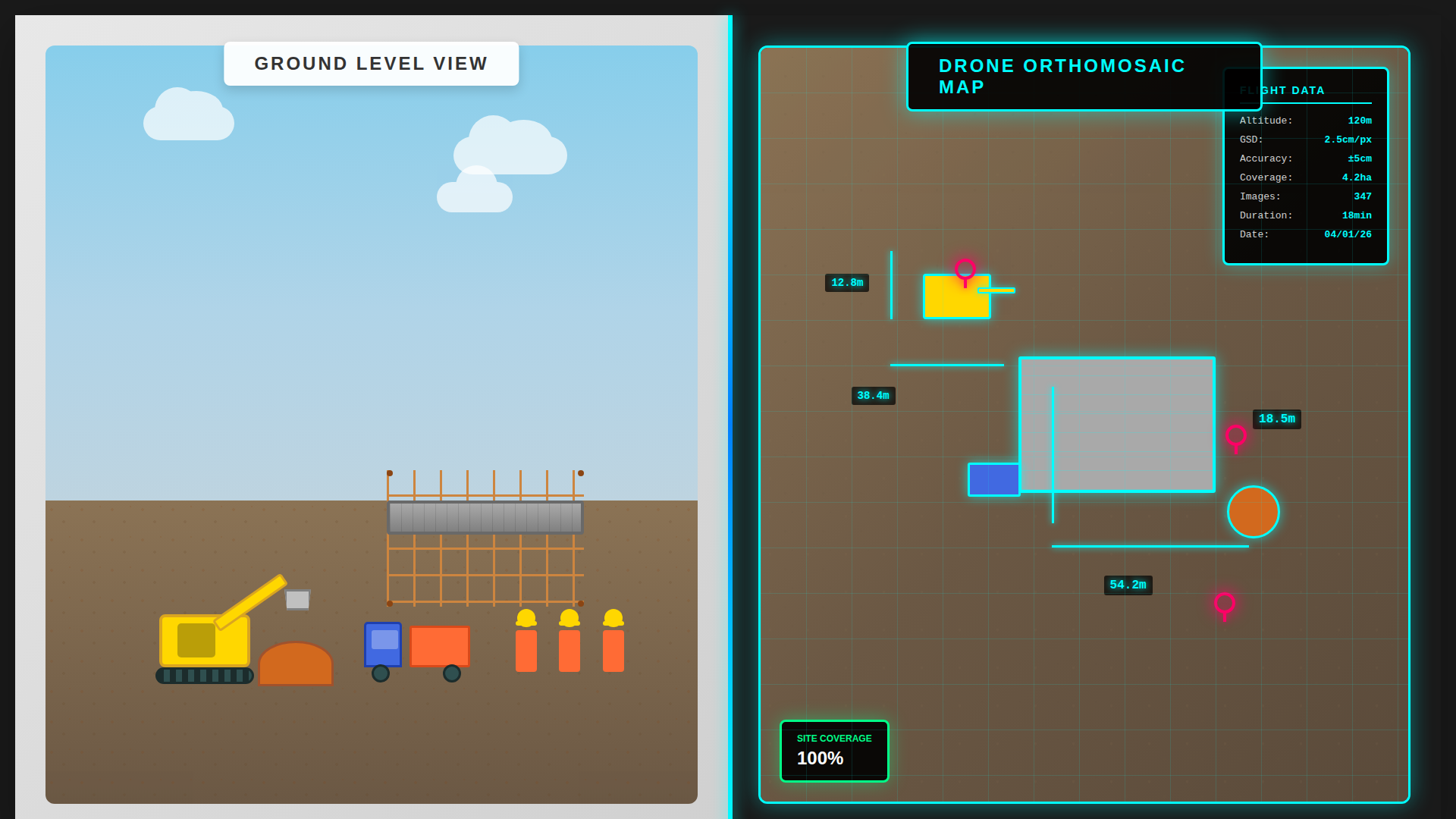
Large-scale construction projects use drone photogrammetry to track progress, verify contractor work, and identify issues before they become expensive problems. A commercial developer in Texas discovered foundation irregularities during a drone survey that would have cost $400,000 to remediate after completion. Caught early, the fix cost $22,000.
The Critical Importance of FAA Compliance & Safety
Here's where many organizations stumble: FAA drone compliance USA isn't optional, and violations carry consequences that go far beyond fines.
The Federal Aviation Administration maintains strict regulations governing commercial drone operations under Part 107. These rules address:
- Operator certification requiring aeronautical knowledge testing
- Operational limitations including altitude restrictions, visual line-of-sight requirements, and airspace authorizations
- Aircraft registration and maintenance documentation
- Waiver procedures for operations beyond standard limitations
Non-compliance exposes organizations to civil penalties exceeding $30,000 per violation, potential criminal liability, and significant reputational damage. When a construction company in Florida operated drones near an airport without proper authorization, the FAA levied fines and the company lost its largest client contract due to safety concerns.
But compliance extends beyond regulatory checkboxes. Leading organizations implement drone safety and compliance USA frameworks that include:
- Safety Management Systems (SMS) that identify, assess, and mitigate operational risks
- Standard Operating Procedures (SOPs) governing every aspect of flight operations
- Incident reporting and investigation protocols
- Continuous training and proficiency requirements
- Emergency response procedures
These aren't bureaucratic burdens—they're the foundation of sustainable, defensible drone programs.
Why Organizations Need Drone Consulting Services
Building an enterprise drone capability isn't as simple as hiring a pilot and buying equipment. Organizations face complex challenges that derail implementation without expert guidance.
Implementation Complexity
Where do you start? What equipment meets your operational requirements without exceeding budget? How do you integrate drone data into existing GIS systems? Which airspace authorizations do you need, and how long does the waiver process take?
These questions multiply quickly. Drone consulting services USA provide the strategic framework that transforms ambiguous goals into actionable roadmaps. Consultants with deep industry experience help organizations avoid costly mistakes—like purchasing unsuitable equipment or building non-scalable programs.
Training & Certification Requirements
The FAA Part 107 exam covers aeronautical knowledge, but passing it doesn't make someone an effective enterprise operator. Drone training and certification USA programs must address:
- Mission-specific flight techniques
- Sensor operation and data collection protocols
- Emergency procedures and risk management
- Data processing and analysis workflows
- Regulatory updates and compliance maintenance
Organizations that cut corners on training inevitably face operational failures, safety incidents, or compliance violations that cost far more than comprehensive training would have.
Regulatory Navigation
Obtaining waivers for night operations, flights over people, or beyond visual line-of-sight operations requires understanding FAA processes, documenting safety cases, and often engaging in multi-month approval cycles.
Expert consultants accelerate these processes, sometimes cutting approval timelines in half through proper documentation and FAA relationship management.
How Expert Consulting Drives Successful Implementation
SkyIntelli represents the emerging model for enterprise drone adoption: comprehensive consulting partnerships that address strategy, compliance, training, and integration as interconnected challenges.
Strategic Planning & Needs Assessment
Before any equipment purchases or training begins, organizations need clarity on objectives, success metrics, and realistic timelines. Expert consultants conduct thorough assessments that identify:
- High-value use cases aligned with organizational priorities
- Technical requirements and equipment specifications
- Regulatory pathway and timeline expectations
- Resource requirements (personnel, budget, infrastructure)
- Integration points with existing systems and workflows
This strategic foundation prevents the common mistake of implementing drone programs that produce impressive data nobody uses.
Customized Training Programs
One-size-fits-all training fails in enterprise contexts. A law enforcement agency's operational requirements differ fundamentally from a utility company's inspection protocols. Effective training programs adapt to:
- Industry-specific operational environments
- Organizational safety cultures and risk tolerances
- Equipment platforms and sensor technologies
- Data management and analysis requirements
- Regulatory contexts and compliance frameworks
Organizations working with specialized consultants achieve operational proficiency 60% faster than those attempting self-directed learning.
Compliance Management & Documentation
Maintaining compliance isn't a one-time checkbox—it's an ongoing operational requirement. Expert consulting establishes:
- Documentation systems that satisfy FAA record-keeping requirements
- Audit procedures that identify compliance gaps before they become violations
- Update protocols that incorporate regulatory changes into operations
- Waiver management processes for expanded operational capabilities
- Safety management systems that continuously improve performance
Operational Integration
The ultimate measure of success isn't whether drones fly—it's whether aerial data drives better decisions. Leading consultants help organizations:
- Build data pipelines that move information from flight to analysis to decision-makers
- Integrate drone data into existing enterprise systems (GIS, asset management, CMMS)
- Establish workflows that embed drone operations into standard procedures
- Create feedback loops that improve data quality and operational efficiency
Measurable Benefits of Enterprise Drone Adoption
Organizations that successfully implement enterprise drone programs report transformational results:
Cost Reduction
Infrastructure inspection costs drop by 50-75% compared to traditional methods. A pipeline operator in Texas reduced inspection costs from $850 per mile to $120 per mile by transitioning to drone-based surveys. Across 3,000 miles of pipeline, that's $2.2 million in annual savings.
Operational Speed
What once took weeks now takes days or hours. A power utility cut vegetation management survey time from 14 days to 3 days, enabling faster response to encroachment issues and reducing outage risks.
Enhanced Safety
Removing personnel from dangerous environments prevents injuries and saves lives. A telecommunications company eliminated tower climbing for routine inspections—work that contributed to multiple serious injuries annually. Two years after implementing drone inspections: zero climbing-related injuries.
Data-Driven Decision Making
Enterprise drones generate rich data sets that enable predictive maintenance, optimized resource allocation, and evidence-based planning. Transportation departments use drone data to prioritize road repairs, maximizing impact per dollar spent. Construction firms detect issues before they escalate into change orders and delays.
The Future of Enterprise Drone Technology
The current generation of drone operations management systems represents just the beginning. Emerging capabilities will further transform government and industrial operations:
Artificial Intelligence Integration—AI-powered image analysis will automatically detect infrastructure defects, vegetation encroachment, or security threats, reducing human analysis time by 90%.
Autonomous Operations—Drones will conduct routine inspections autonomously, following pre-programmed routes and automatically flagging anomalies for human review.
Real-Time Analytics—Edge computing will enable on-drone data processing, delivering actionable intelligence during flight rather than hours later.
Swarm Technologies—Multiple coordinated drones will survey large areas simultaneously, reducing inspection timelines from days to hours.
Organizations building robust enterprise drone programs today are positioning themselves to adopt these advanced capabilities as they mature. Those waiting on the sidelines will face steeper learning curves and competitive disadvantages.
Conclusion
Enterprise drone solutions are no longer experimental technology—they're operational requirements for government agencies and industrial organizations serious about efficiency, safety, and fiscal responsibility.
But successful implementation demands more than equipment purchases. It requires strategic planning, rigorous training, unwavering compliance, and thoughtful integration. The organizations achieving transformational results aren't going it alone. They're partnering with experienced consultants who navigate complexity, accelerate capability development, and ensure sustainable, compliant operations.
The question isn't whether your organization will adopt enterprise drone solutions. The question is whether you'll build a program that delivers measurable value while managing risk—or one that struggles with compliance issues, operational failures, and unrealized potential.
Ready to explore how enterprise drone consulting can transform your operations? Contact SkyIntelli to schedule a consultation with drone integration specialists who understand both the technology and the regulatory landscape. Discover how comprehensive consulting, customized training, and proven compliance frameworks can accelerate your path to operational drone excellence.
Frequently Asked Questions
Q: What is the difference between consumer drones and enterprise drone solutions?
A: Enterprise drone solutions combine professional-grade aircraft with advanced sensors, data management systems, compliance frameworks, and trained operators. Unlike consumer drones designed for recreational use, enterprise systems support mission-critical operations requiring reliability, regulatory compliance, and integration with existing business processes. They typically include redundant safety systems, specialized payloads (thermal, LiDAR, multispectral), and software platforms for data processing and analysis.
Q: Do I need FAA certification to operate drones for my government agency or business?
A: Yes. All commercial drone operations in the USA require FAA Part 107 Remote Pilot certification. Operators must pass an aeronautical knowledge exam covering airspace, weather, regulations, and flight operations. Additional waivers may be required for operations beyond standard limitations (night flights, beyond visual line of sight, flights over people). Government agencies and businesses must also maintain proper aircraft registration, operational documentation, and compliance with all FAA regulations.
Q: How long does it take to implement an enterprise drone program?
A: Implementation timelines vary based on organizational complexity and operational scope. Basic programs with standard operations can launch in 2-3 months, including needs assessment, operator training, equipment procurement, and policy development. Complex programs requiring FAA waivers, custom training protocols, or extensive system integration may require 6-12 months. Working with experienced drone consulting services significantly accelerates timelines by avoiding common pitfalls and streamlining regulatory processes.
Q: What are the primary cost considerations for enterprise drone adoption?
A: Total cost of ownership includes aircraft and sensors ($15,000-$100,000+ depending on capabilities), operator training and certification ($2,000-$10,000 per operator), software platforms for flight planning and data management ($2,000-$20,000 annually), insurance ($1,500-$5,000 annually), maintenance and spare parts (10-15% of equipment cost annually), and consulting services for implementation and compliance management. Most organizations achieve ROI within 12-18 months through operational efficiencies and cost reductions.
Q: Can drones really improve safety in industrial operations?
A: Absolutely. Enterprise drones remove personnel from hazardous environments including heights, confined spaces, extreme temperatures, and unstable structures. They enable inspections of dangerous infrastructure (bridges, towers, industrial equipment) without exposing workers to fall risks or other hazards. Organizations report significant reductions in workplace injuries after implementing drone programs for routine inspections. Additionally, improved data quality enables proactive maintenance that prevents catastrophic failures, further enhancing overall safety.